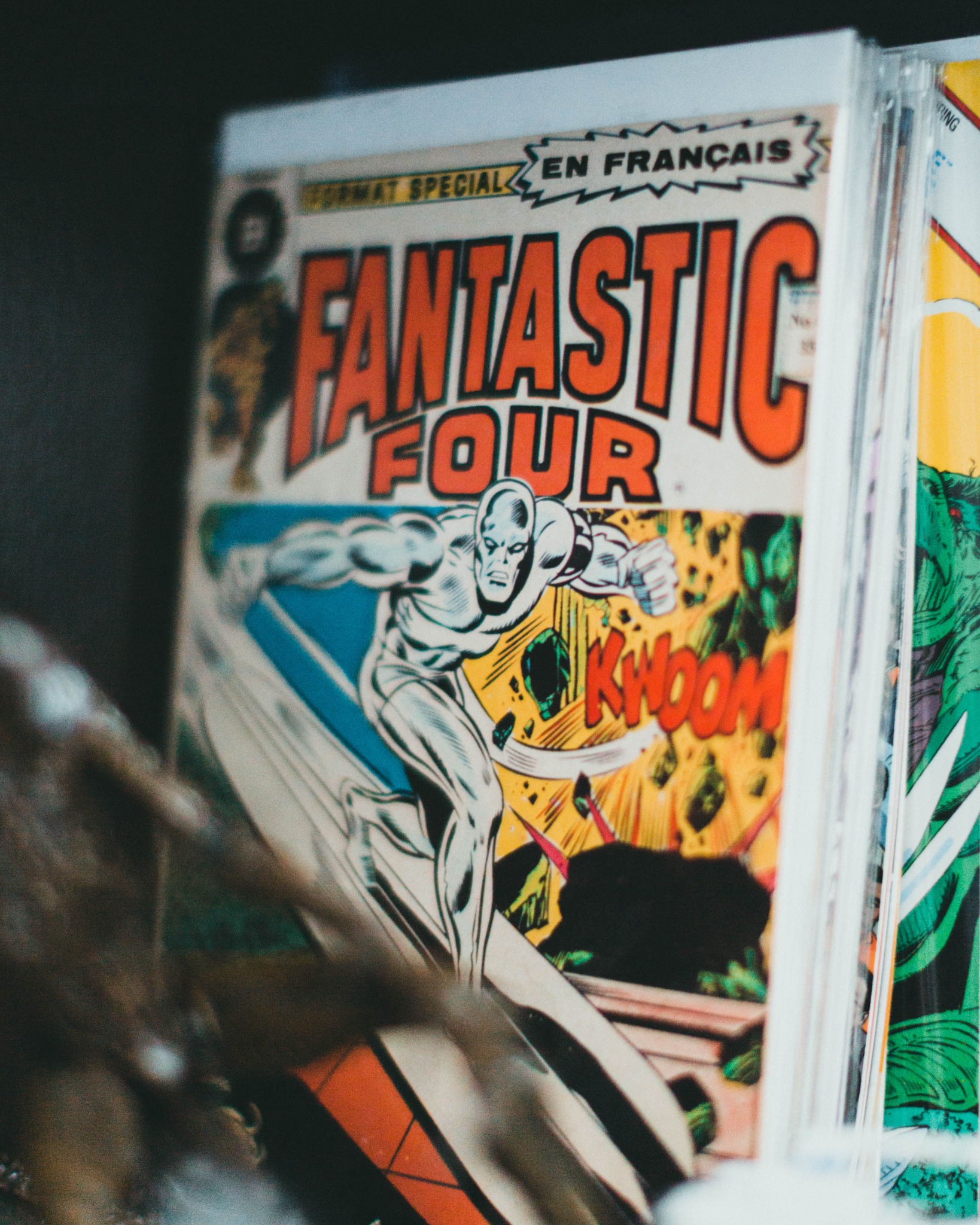
A strong comic-reading lesson can develop the literary habits expected of prose readers while adding explicit attention to visual composition, framing and sequence.
Story architecture
Narrative, exposition, plot, conflict, rising action, climax, falling action, denouement, subplot, setting, theme and point of view can all be traced through words and images together.
Character & dramatic voice
Characterization emerges through speech, gesture, expression, costume, silence, relationships, camera angle, narration and what other characters say or withhold.
Language, sound & style
Dialogue, register, code-switching, onomatopoeia, imagery, metaphor, simile, hyperbole, wordplay and emphasis become visible and discussable on the page.
Symbol, culture & imagination
Colour, recurring objects, costume, mythology, environment and visual motifs can support interpretation of identity, representation, culture and theme.
Visual grammar
Panels, gutters, captions, speech balloons, framing, camera angle, page layout, colour, pacing, flashback and foreshadowing all shape meaning.
Critical literacy
Students can ask who speaks, whose perspective is centred, what the page invites us to assume, and how power, identity or difference is represented.